
More and more, a shopping trip starts with a question typed at an AI assistant rather than a list of blue links. Ask one for "a durable backpack for daily commuting on a tight budget" and it won't hand back ten results. It'll name two or three. Landing in that short list is the new game, and it has a name people are starting to use: Generative Engine Optimization, or GEO.
Why this isn't just SEO with a new label
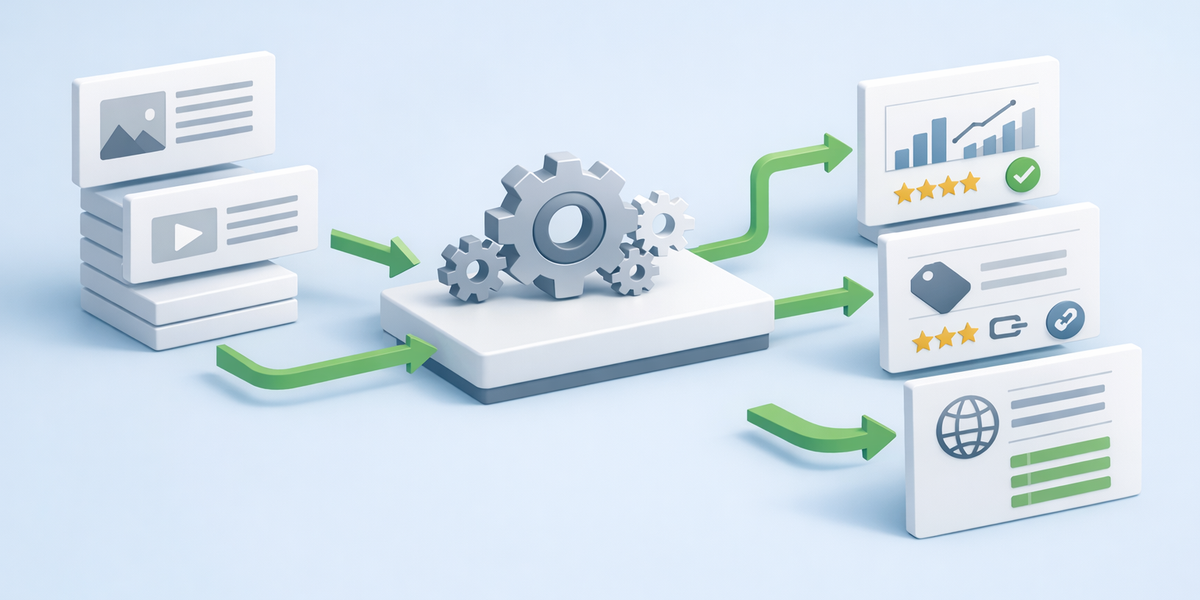
Classic search ranks pages. AI search reads a pile of sources, writes an answer, and cites a few. You're no longer fighting for position one; you're fighting to be one of the sources the model trusts enough to quote. That shift changes what you should care about.
What these systems are looking for
Facts a machine can read
AI systems favor content where the facts are unmistakable: what the product is, what it costs, what it's made of, who it's for. Structured data and plain, factual descriptions make those details easy to pull out and quote without distortion.
Specific answers to specific asks
People phrase things differently when they're talking to an AI. The queries get longer and more particular. Content that answers a genuine need with concrete detail, rather than vague marketing language, is far more likely to get matched to those nuanced requests.
Access for AI crawlers
None of this matters if the crawlers can't reach your content. A newer convention, the llms.txt file, gives AI systems a clean, structured guide to your most important pages. Think of it as a sitemap aimed squarely at language models.
Consistency it can trust
When your product details line up across the page, the metadata, and the structured data, a model is far more comfortable citing you. Contradictions and gaps do the opposite; they make it hesitant to put your name in an answer.
Getting your store recommended
Here's the reassuring part: the groundwork for AI visibility overlaps heavily with plain good SEO. Clear metadata, accurate structured data, content written for humans. Seokai supports this end to end with an llms.txt generator for AI discoverability, automatic Schema.org JSON-LD, AI-visibility checks, and metadata tuned to be specific and factual, which is exactly what AI engines reward.
Multi-language metadata pulls weight here too. AI assistants serve people in dozens of languages and tend to surface sources that match the language of the question.
What to remember
AI engines recommend the sources that are clearest, most specific, and easiest to trust. Make your facts machine-readable, answer real questions head-on, and open your content to AI crawlers. Do that and your store becomes the kind of source these systems are glad to name.