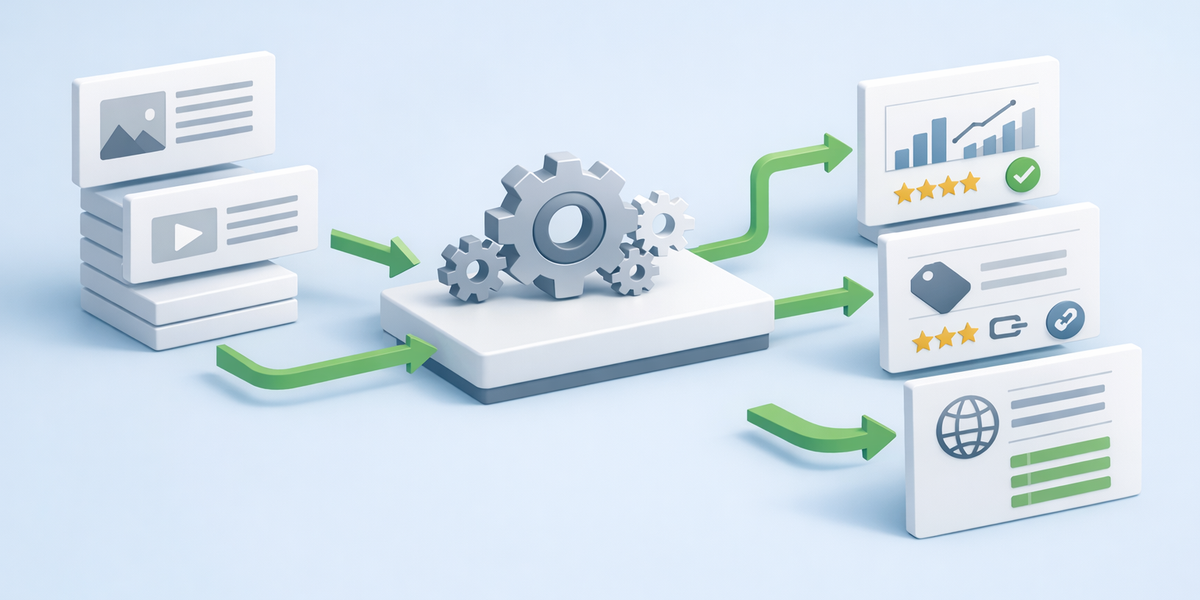

A product page has two jobs that pull in slightly different directions. It needs to be found, which means writing for search engines. And it needs to close the sale, which means writing for a wavering human. Nail one and skip the other and you end up with either traffic that bounces or a beautiful page nobody ever lands on. Below is how each piece pulls its weight.
Title and meta description
Your meta title does more on-page work than any other single element. Lead with the product name and the keyword people actually type, and keep it short enough that search engines show the whole thing rather than cutting it off. The meta description won't move your ranking, but a sharp one earns clicks. Think of the pair as your shop window in the results page; it's the only thing a searcher sees before deciding whether you're worth a visit.
The H1 and the URL
One H1 per page. Usually that's just the product name, and it should leave zero doubt about what the page is. The URL handle wants to be short and human-readable, with the keyword in it. Skip the random codes and dates; they mean nothing to a shopper scanning a link.
The description
Pasting the manufacturer's blurb is the single most common mistake here. That same paragraph already lives on dozens of competing stores, and search engines treat it as duplicate content. Write your own. Cover the benefits, the use cases, the materials, and the questions buyers keep asking. Work in the words people search without forcing them, and break the copy into short sections with subheadings so a skimming shopper and a crawler can both follow it.
Images and alt text
Good photos sell the product. Alt text is what a search engine, a screen reader, and an AI model read instead of seeing the photo. Solid descriptions help with accessibility, get you into image search, and tell AI systems what you're actually selling. Writing alt text for every image and every variant by hand is mind-numbing, which is exactly why it's worth handing off. Seokai's AI vision writes image alt text in bulk so nothing slips through undescribed.
Structured data
Product schema with price, availability, and ratings is what makes you eligible for rich results and feeds the shopping and AI surfaces. Seokai adds Schema.org JSON-LD automatically and keeps it in step as your prices and stock shift, so the markup doesn't quietly go stale.
Trust and conversion signals
Even a well-ranked page can lose the sale if the shopper hesitates. A few things settle that hesitation fast:
- Reviews and ratings, both on the page and in your schema.
- Straight answers on price, shipping, and returns, with no digging required.
- An add-to-cart button you can't miss.
Internal links
Point to related products, the parent collection, and any guide that's relevant. It keeps shoppers browsing, spreads ranking signals around, and helps crawlers see how your catalog connects. Seokai's internal-linking suggestions, available on the higher tiers, surface these opportunities so you're not hunting for them manually.
Pulling it together
There's no one move that makes a product page great. It's a sharp title, copy you actually wrote, described images, valid schema, visible trust signals, and links that go somewhere useful, all working at once. Tune them together and you get a page that ranks and sells instead of doing just one.