Shopify Catalog, Explained: How Your Products End Up Inside ChatGPT
There is no button. That is the part most merchants get wrong when they hear about Shopify Catalog for the first time.
There is no integration to configure, no channel to install, no toggle in settings labeled "sell in AI chats." If your store meets a short list of requirements, your products are already in the dataset that ChatGPT, Microsoft Copilot, Google AI Mode, Gemini and the Shop app read from. Shopify's own March 24, 2026 announcement puts it plainly: products become discoverable in ChatGPT by default, with no separate integrations, no apps, and no transaction fees beyond standard processing rates.
So the question is not whether to participate. It is whether your data is good enough to survive the trip.
What Catalog actually is
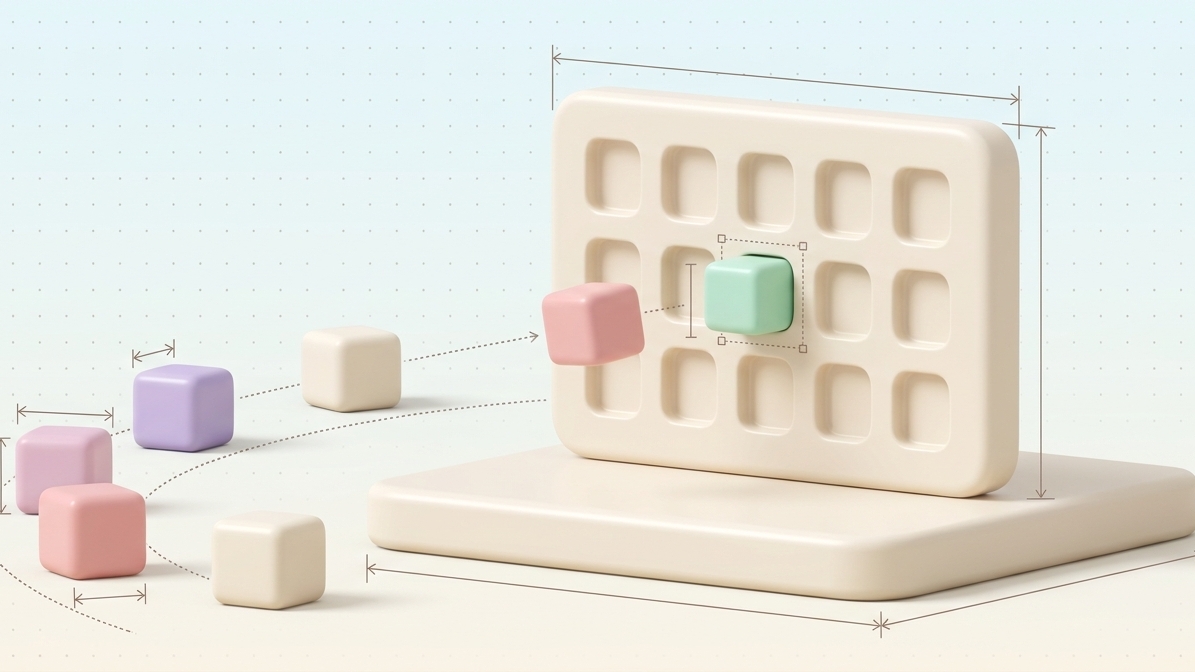
Shopify describes it in its agentic commerce explainer as "the structured data layer that makes products readable to AI agents." Billions of products across millions of merchants, standardized into a universal taxonomy, with pricing and inventory verified in real time, then syndicated to every connected AI platform.
The alternative it is competing with is scraping. Shopify is direct about this too: platforms without access to structured data through something like Catalog fall back on crawling web pages, which "often surfaces outdated pricing, incorrect inventory, and missing product context."
That framing is self-serving, and it is also basically correct. A crawler reading your product page has to guess at the price from HTML that may be rendered by JavaScript, has to infer stock status from a button label, and has no idea your variant matrix exists. A feed does not guess.
Which channels, and for whom
The channel list and the gating are not the same thing. From Shopify's documentation:
- ChatGPT and Microsoft Copilot: any merchant in Shopify Catalog who sells to US buyers.
- Google AI Mode and Gemini: select US-based shops selling to US buyers, through the Google & YouTube sales channel.
- Meta surfaces: through the Facebook and Instagram sales channel.
- Shop app: included.
If you are a UK or EU merchant reading this and wondering why nothing has changed, that is why. The distribution is real but it is currently pointed at US buyers.
"Eligible" is a real checklist, not a vibe
This is the part worth actually auditing, because Shopify publishes the requirements for being included in Shopify Catalog and they are more specific than most merchants assume.
At the store level: you need to be on the Starter plan or higher, not password protected, compliant with Shopify's Terms of Service and Acceptable Use Policy, with a verified account, two-step authentication enabled, and good account standing based on sales history, fulfillment, chargeback rates and payment timeliness. Open policy or compliance issues can knock you out.
At the product level: a title and at least one image, a price above zero, published to your online store, Hydrogen or Headless channel, an identifiable product URL, status not set to Unlisted, not hidden from search engines, and no sensitive or mature content.
Read that list again with your worst products in mind. Free gift-with-purchase items priced at $0 are excluded. So is anything you set to Unlisted to tidy up a collection page. So is the product your last agency hid from search engines for reasons nobody wrote down. Each of those is a silent exclusion, and nothing in your admin will tell you it happened.
Shopify notes that stores can lose eligibility over time if the requirements stop being met. It is not a one-time check.
Opting out is worse than it sounds
You can remove Catalog access for ChatGPT and Microsoft Copilot specifically. Shopify's product discovery documentation warns that your products "might still be displayed through other external discovery and listing methods" if you do, which means you have given up the clean feed while keeping the scraping.
The nuclear option, setting products to Unlisted, hides them from AI channels and from Google and from your own store search at the same time. That is not an AI setting. That is unpublishing.
The 2x claim, held up to the light
Shopify's Spring '26 Edition merchant post, published June 17, 2026, states it directly: "AI searches powered by Shopify Catalog convert at 2x the rate of those using scraped data."
Worth being precise about what that is and is not.
It is Shopify's number, measured by Shopify, with no published methodology and no independent audit. It compares two things Shopify controls one side of. And the comparison population is doing a lot of work: what counts as a scraped-data search, and were those queries about the same products, in the same categories, at the same intent level? We do not know, because nobody has said.
The mechanism is plausible. Complete structured records are easier for an assistant to place in an answer than a guessed price from stale HTML, and a product card with correct availability converts better than one that sends a shopper to a sold-out page. But plausible mechanism plus vendor number is not evidence, and we would not put that figure in a board deck without a caveat attached.
Shopify's agentic commerce explainer carries two more figures deserving the same scrutiny, also Shopify's own: Q1 2026 AI-driven traffic to Shopify stores grew 8x year over year, and orders from AI-powered searches rose nearly 13x. Enormous multiples off a base that started near zero. For most individual stores an 8x increase still lands somewhere under one percent of sessions, which is a rounding error you can safely ignore right up until it is not.
Direction is right, magnitude is unverified, and preparing costs so little that the argument barely matters.
What to fix first
Eligibility before optimization. A product that is excluded cannot be improved into an answer, and the exclusions are easy to find if you go looking.
Run four filters over your catalog and look at what falls out:
- Priced at $0. Gift-with-purchase items, sample products, placeholder variants.
- Status set to Unlisted. Usually done years ago to tidy a collection page.
- Hidden from search engines. Often done by a previous agency, rarely documented.
- Not published to the Online Store, Hydrogen or Headless channel. Common after a theme migration or a channel cleanup.
Each of those is a silent removal from Catalog. Nothing in your admin flags it. Decide deliberately about each one rather than discovering it in six months.
After that, the single field carrying the most weight is category. Shopify standardizes products into a universal taxonomy, and the taxonomy decides which queries you are even a candidate for. A merino base layer filed under "Apparel" is pooled with socks and raincoats. Mapped to the right node, it competes against other base layers, which is the fight you can win. Five minutes of work, bigger effect than most copy rewrites.
The rest of the attribute work, variants, SKUs, GTINs, materials, dimensions, is its own project and worth treating as one. The rule underneath all of it is short: a spec written in prose is persuasion, and the same spec as a structured value is eligibility. Agents filter on eligibility.
Structured data on your own pages is a separate job from Catalog and still worth doing, because it is what a crawler reads when a shopper arrives from the answer rather than through the feed. The no-code route is in adding schema markup to Shopify.
None of this is interesting work. It is spreadsheet work that also improves your on-site filters, your Shopping feed and your merchandising. If agentic shopping stalls for another two years, you will have spent the time fixing the dullest and most useful thing in the store.
If you want a per-product read on what is missing before an agent sees it, Seokai's agent-readiness audit scores your catalog field by field: check your product data.
Share this Story