Agentic Commerce: What Happens When AI Agents Do the Shopping
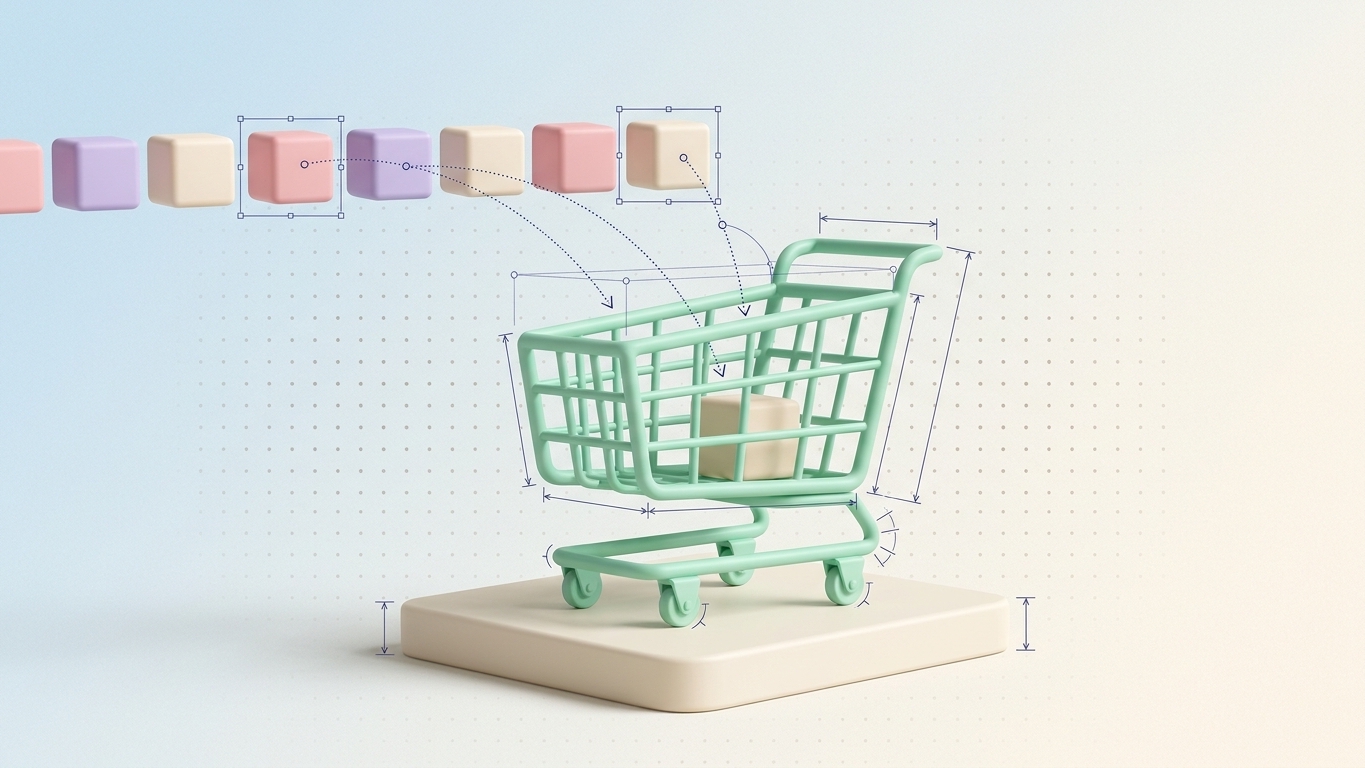
Somewhere today, a model is reading your store. Not your homepage, not the collection page you spent a weekend laying out. A JSON response: title, description, price, variant options, a category label, a review count. No theme, no photography, no badges. That payload is your store, as far as the machine is concerned.
That is the part of agentic commerce that already happened. The part everyone wrote about, agents pulling out a credit card and buying things, mostly did not.
The checkout story got ahead of itself
On September 29, 2025, OpenAI and Stripe shipped Instant Checkout along with the Agentic Commerce Protocol, released open source. You could buy inside ChatGPT. It started with single-item purchases from US Etsy sellers, then opened to Shopify merchants.
Five months later it was over. OpenAI pulled back on March 4, 2026 and moved checkout into merchant-specific apps instead. Shopify president Harley Finkelstein said publicly that only about a dozen of Shopify's millions of merchants had actually gone live with it. A dozen. The protocol survived, the consumer feature did not.
Worth sitting with that number before you plan anything around agent checkout. The infrastructure existed, the biggest AI assistant in the world was pushing it, and adoption rounded to zero.
What actually shipped is a reading layer
Meanwhile, the boring half of agentic commerce got very real.
On January 11, 2026, Sundar Pichai announced the Universal Commerce Protocol at NRF, co-developed with Shopify, Etsy, Wayfair, Target and Walmart, with twenty-plus payment and retail companies behind it. UCP is an open spec. Merchants publish a profile at /.well-known/ucp declaring what they support, and agents can talk to it over REST, MCP, or A2A. Shopify wrote up its side of the design the same day.
Here is the part most merchants have not registered. Shopify runs a Global Catalog that lets an agent search products across every Shopify merchant from a single endpoint, and merchants do not opt in. Your products are queryable by agents right now, whether or not you have thought about it, whether or not your data is any good.
What the agent actually gets
Shopify documents the fields the catalog tools return: title, handle, description, price with currency, images and their alt text, ratings and review count, variants with SKUs and option availability, and category under multiple taxonomies at once, Google Product Category, Shopify's own, and whatever you set yourself.
Notice what is not on that list. Your layout. Your hero video. The comparison table you built. The scarcity banner. The careful order in which you sequence objections down a product page. None of it survives the trip.
One line in Shopify's docs deserves more attention than it gets: some fields "might be inferred by Shopify's AI" and accuracy varies with the data available. Translation, if you leave a field blank, something else fills it in on your behalf, and it may be wrong. A vague product type does not stay vague. It gets guessed at.
The honest numbers
Adobe Analytics, which tracks over a trillion visits to US retail sites, reported that in May 2026 retail traffic from AI sources rose 138% year on year, and that AI-referred visitors converted 54% higher than non-AI traffic and generated 53% more revenue per visit. A year earlier the same channel converted worse than half the non-AI rate.
Read those numbers carefully, because they are not measuring what the headlines imply. That is people arriving on your site from an AI assistant, then buying like people. It is not agents transacting. Public data on autonomous agent purchase volume is thin, mostly vendor-published, and we would not build a quarter around it.
Which is the actual state of play in mid-2026: assistants are doing the shortlisting, humans are doing the buying, and the shortlist is built from structured data.
Merchandising splits in two
If that holds, the job divides. There is a persuasion layer, your photography, your copy voice, your page design, which still does exactly what it always did, because a human still lands on the page and decides. And there is an eligibility layer, your attributes, taxonomy, specs, and variant data, which decides whether that human ever sees the page at all.
Most stores have spent a decade investing in the first and treating the second as data entry.
The practical difference is small and annoying. "Fully waterproof, tested to 10 metres" written in the third paragraph of your description is persuasion. The same fact in a structured attribute is eligibility. An agent filtering a hundred candidates on behalf of someone who asked for a waterproof watch under $300 will use the field. It has no reason to parse your prose for a spec that should have been a value.
Same with product type. A product classified as "Accessories" competes with phone cases. Classified properly, it competes with the thing it actually is.
What we would not predict
Plenty here is unsettled, and pretending otherwise would be dishonest.
Which protocol wins is genuinely open. UCP and ACP both exist, both are open source, both have real backers, and the two biggest AI companies are pulling in different directions. Whether consumers will hand an agent payment authority at scale is also open, and the Instant Checkout retreat is the only hard evidence we have either way. Anyone quoting you a 2030 percentage is guessing with a spreadsheet.
What is not speculative is that the reading has started. Agents are querying catalogs today, using taxonomy and attributes and structured fields, and they cannot see your theme.
The hedge is cheap, though. Clean product data, accurate categories and honest specs make you easier for an agent to place, and they also make your on-site search better, your Shopping feed cleaner, and your filters actually work. If agentic commerce stalls for another two years, you spent that time fixing the least glamorous and most useful thing in your store.
If you want to see how your catalog reads to a machine right now, start with an AI-visibility check rather than a prediction.
Share this Story